Wednesday, 28 April 2010


just some random pics i found and thought they were fun. at the moment im kinda obsessed with buttons :) we're doing a recycling project and i have collected buttons from my family and friends (grans button box has come in very handy) im thinking of doing a wall piece but dont know what it will look like yet.

Tuesday, 30 March 2010

Proposal 5a

Wearable electronics is at the fore front of the fashion and industry. As covered in my previous essay a wearable technology is

Always attached to a person and is comfortable and easy to keep and use

(1)

To take my research further on for mind maps and brainstorming I would conduct interviews to see what people think of the security around them. I would also observe a busy shopping centre and possible observe a quieter environment to compare. Using these techniques I think my research would be more accurate and I would have more of an in depth view of the public. I may also take information about the wearable electronics already available to see what the general public think of then. If they think they would feel safer with this technology available. Would they be willing to pay a higher price for something safer? Do they think the technology is relevant to our current climate or is it out of touch like in a comic book?

"Whether reacting to the user’s mood, generating electricity or morphing into protective shields the latest smart wear has leaped from fiction to reality."(2)

The recent techniques that I have learned over the past semester are analysing photographs the creation of a story, interviews and observations. The analysing of photographs is a very useful technique but I do not think for this project it would be of any value as the use of this is purely the viewer’s opinion. This means of primary research would be more useful in a personal or commissioned capacity as depending on the choice of photographs the viewer may get a different meaning. The use of text may make the viewers come up with the same answers but it is not guaranteed. If this secondary research technique was used in the gathering of information in the making of wearable electronics the idea may be to create a story linking a wearable peace in a block based interface such as an ipod like device that is wearable but able to be removed if needed. The information that may be gathered would be of some value as it is the public’s opinion but I think it would be difficult to translate into a design. I feel that this technique would be very useful in the future and I would defiantly use in my personal design process perhaps in a commition situation.

The next secondary research technique is interviews which I would find very useful in the research of wearable electronics because you could find out what the public really think. I would interview the general public and security officers to see the problems they have with handbag security and if they think it could be improved in anyway. I would also consider showing the interviewees the new technology that is ‘in the pipe line’ to see what they thought of them and how they could be improved. This may link back to the photo analysing but it is not the story that would interest me but the improvements that could be made.

I could also contact the police to see if they have much success in location stolen bags and to see if they think a tracking device would be of any use. I would also ask the police and the public if they think this use of tracking is a breach of human rights as the person carrying the bag would be tracked this may come under the category of a ‘nanny state’ or ‘big brother’ as people are watching you all the time, granted this measure is for the publics own safety but it is understandable that there would be some opposition. If so then I would need to come up with a new solution to the handbag theft problem that exists in our society. I don’t think there would be an age limit on the people I ask as people of all ages carry bags and get them stolen. Possible the optimum age would be someone in their thirties or forties although the people who are the most targeted group is the elderly. The elderly would be a good group to ask but they may not understand the technology.

Another useful research technique I would find for this topic would perhaps be the observations. I would observe a shopping environment to see how people react with different bags for example are they very overprotective of an expensive bag and don’t really care what happens to a Primark bag. Or do they carry lots of plastic bags instead of reusable bags. This would hopefully mean that I would have a great understanding of how the public work and how they react in certain situations such as a busy shop or a quiet street are they on there guard or do they behave as if they were at home and comfortable with the situation? Do the people know where the security cameras are or where the security officer is in case there bag is snatched? Do people look calmer when they know there being watched do they feel more secure? Are people uneasy in a new environment? It would also be good to witness a theft (purely for research purposes) to see how everyone reacted, how panicked were they? This of course is not possible to observe but would be a useful addition to the research material.

I could also observe the making of wearable electronics and interview the designers and developers of this new technology. It may be possible to sample the products to see how they really work and test them for myself.

In conclusion these methods would be a great help in researching the publics opinion on this subject. I think the secondary research method that I would use most are the interviews and the observations as these give a more general description of what the public think unlike the photograph analysing in which the outcome is purely up to the viewer. Overall these methods would greatly benefit the research into wearable electronics, especially to see what the public think of the new improvements that are being made to our design environment.


Proposal 5b


The stone setting project brief: design and make a piece of jewellery in metal which incorporates the setting of another material or materials. Your design is to be inspired by the religious/ spiritual symbolism used in jewellery and the way precious/ semi-precious stones and other materials are used.

For this project I think I would use all of the research techniques I have learned over the past two semesters. As the brief says, my jewellery piece must be inspired by religious/ spiritual symbolism as I am not a particularly religious person this project was quite hard to research, and if I had known about these techniques sooner I perhaps would have used them to there full advantage. I did use mind maps and brain storming as a starting point but I feel I would get a more in depth opinion buy using both the primary and secondary research techniques.

The first step in my research would be a mind map to see what I could come up with on the subject of paganism. I would also study any books in the library on the subject and have a look on web sites such as bbc-religion. The information gathered in these books and from the web would be added to a larger and more complex mind map. I would also talk to my friends around me and perhaps brain storm with the information I have gathered.

I would first interview my friends and family to see what they think of religion, in particular the pagan religion. I would also ask if they new anything about this particular religion and what they thought of it. I would also try and interview the people who follow this religion, to see what they have in the way of jewellery that represents their faith. This would be a very useful insight in to this form for religion, it would be interesting to find out what symbols they worship and what they beleve to be sacrit.

‘Paganism describes a group of contemporary religions based on a reverence for nature. These faiths draw on the

traditional religions

of indigenous peoples throughout the world’ (1)

I would incorporate the evidence that would be collected in these interviews in to my mind maps and brain storming. This would hopefully give me more in depth avenues to research there for making the research possess more exiting.

The analysing of photographs would also be a useful tool in researching the pagan religion, as I could show people images of pagan icons and see what the first thing that pops in to their heads. This would give me an insight in to the publics thinking about this religion and how it is perceived. I could also gather images that could add up to a particular icon such as the green man in which I would have photos of oak leafs, the forest and perhaps a man. If people didn’t come up the answer I wanted then I could add text to see if it would help in my quest for the link to the green man. If these photos didn’t work then I could try a different set of photos or perhaps add one or two extra images to see if this made a difference. The problem with this method is that your outcome is too guaranteed, rather that it is purely the imagination of the people that are asked. Not that this is not a valid opinion, it just may not be the required at that point. As I found out while doing this task people tend to ramble on in which the point of the task may be lost in translation as it is not a epic novel that is needed be a few key point that are relevant.

The one method that I think would be harder to gather information from would be the observation. This is because to my knowledge there is not a place in Dundee where pagans worship. I do not know is such a place even exists, perhaps this would be an area to research, to see if pagans worship together in a public place or in private, and what kind of worshiping do they indulge in. do they have any idles or special garments that they wear? Do they carry anything or act in a special way? And do they use any tools in their worshiping? Perhaps I could carry some of this information in to the design. This would have been a very interesting observation as there was not much information available in the library or online. If I would have had this information available to me then perhaps my final design would have been different, although I am happy with my final product, the added information may have been of use.

In conclusion these methods would have been very useful in researching religious/ spiritual symbolism I think the hardest but perhaps the most useful research technique would be the observation method. The information would be hard to come by as there may not be facilities available to people of the pagan religions in Dundee or the surrounding area. The other very useful techniques are photograph analysing and interviews. They both are would be valid tools in this research, but do have there flaws. The photograph analysing is useful if you wish to ascertain a story related to an object or in this case a myth, but the stories can become to far fetched and overcomplicated. The interviews are useful to find out the publics opinion this can be a good thing or a bad thing depending on the questions you ask and the people who are interviewed.


Bibliography:

5a
El-Sherif. M (2005), Wood Publishing in Textiles ltd, Cambridge England
Jordan. B (2008), web

http://www.azuremagazine.com/magazine/backissues/features.php?id=1654&c=2


Tao. X, (2005), Wood Publishing in Textiles ltd, Cambridge England

5b

BBC religion (2006), web http://www.bbc.co.uk/religion/religions/paganism/


Quotes: 5a
1: page 1 Xaing Tao
2: web article Betty-Ann Jordon

5b

1: web article BBC /religious/ paganism at a glance

Tuesday, 23 March 2010


i was just browsing the web when i came across this weird jewellery. the toilet roll one i put in just because its fun but some of the others are quite disturbing. what does anyone else think of them? would you wear them?

Thursday, 18 March 2010

the interviews

this assignment was an interesting one. we were asked to interview people and ask certain things about the way they dress or how they've decorated their homes. i ask the following questions- 'if your house was on fire what possession would you save?' 'what would you do if you lost this possession?' and 'what does this possession mean to you and why?' and finally 'how did you come to have this possession?'.

the answer i got were very enlightening as women and men differ completely. the men i asked gave me very straight to the point answers, mainly one or two word answers, not very much to go on but the women could talk for ages about there favorite possessions. i found out that women favor things that were given to them by grandparents and things that are very personal to them like photographs of family especially photos of there children. this ties in with my subject, jewellery as it is not the object but the personal feelings you attach to this object. the men i interviewed would choose to save things like there wedding rings (although maybe he would have said different if his wife wasn't there) there mobile phones and there football strip.
it appears that women are more sentimental than men but i would need to ask more people for this to stand. when i asked how they came to have these possession many of the men bought them there selves in contrast to the women who were given most of there things.
i found this assignment quite useful as its not what the object is its what you make it. i think this area would be good to look further into and perhaps bring into my own work as a jeweller.

Tuesday, 9 March 2010

the stuff


here's some of the material that i hope to use, i was just going to use slate and wood mounted on copper but i thought it needed some sparkle so I've added some tigers eye. this gives it an extra edge and meaning. it also makes it more precious which in turn gives it a focus for a religion, because if it was just the raw materials with no precious stone then the religious meaning would not be clear.
i hope to get pictures of my samples uploaded soon.

Thursday, 4 March 2010

design safari

for this 'design safari' a few friends and i went to 'spud-u-like' and observed the different people an there interactions with each other. one of the first observations i made was that as soon as people enter the restaurant they frantically scan for a seat in kind of a scared manner, clearly this is tens moment. the next major hurdle that the customer has to overcome is choosing what they want from the vast menu. when my friend an i want to the counter there was no queue so the staff were eager to take our order even before we had decided what we wanted, this made us feel rushed and a bit flustered. when we got our food there was n care in how it was delivered or assembled, the filling was just thrown on the potato's and your tray was thrust at you as if to say 'here you are now go'.
after we had finished eating, we continued our observations. whilst looking around i discovered that people don't take their coats and hats off this is a very informal way of dinning, although the restaurant is a form of fast food like mcDonald's and kfc, a potato isn't really fast food you have to eat it a bit more slowly with a fork and knife. i also noticed that there is no door which makes you feel rushed and unable to settle, people often look out of the door and windows just kind of staring into space probable trying to relax in and an stressful environment.
when observing the kinds of people that were dinning i noticed it was mostly mothers with children there were however 2 business men and a few older people. at about 1.30pm the shop began to get really busy, a queue had started to form, at this point the struggle to find a seat had intensified and as some people leave a large mess on the tables the customers find them selves cleaning up for others when the staff should be doing this but are busy serving. the people who tend to be more considerate about leaving a mess are mainly mothers and older people.
my final observations are that no one looks at the posters promoting the 'new spud' they appear to completely ignore these signs and the ones saying how great the food is, i think people ignore these because the are constantly bombarded with information that has no point, for instance there were 6 or 7 signs promoting the same thing, this is just over kill and is so unnecessary.
this assignment has opened my eyes to what is around me and the way people act. there are hidden rules surrounding our day to day lives and no one seems to pay much attention to them.

Monday, 1 March 2010

the new thing


just found this on the net, and thought it was so weird i had to share. apparently the new thing is eye jewellery. its a lens with a thread attached then gems hanging from it. tell me what you think? and if you'd wear it?

Tuesday, 23 February 2010

setting stones


here's some cool pictures of unusual stone settings that i found on the web. as i said in my last blog I'm researching the pagan religion. I've been searching the web for healing stones and there properties, the one that interests me the most is the tigers eye. the tigers eye properties are that they promote clear thinking, protection, willpower, balance and courage to name but a few. this stone is thought to have many healing properties such as healing wounds, bruises and stomach problems. whether they work or not i don't know but i think that the belief that they will work is more powerful than the object its self.
for my next step I'm going to research the green man ( a well known pagan symbol) and try some stone setting for myself.

Monday, 22 February 2010

new project

just got the new project from jewellery...........sounds ok. its a stone setting project based on religion/spiritual beliefs. i think im gonna research the pagan religion. my family have a few connections with this religion as a family friend is a shaman and practices in Edinburgh.

was gonna post some pictures to show my thinking but the computer doesn't want to, so they'll have to wait...sorry

Thursday, 18 February 2010

Assignment 2- the ramdom photo's


here are my random photos for assignment 2. the 3 i started with are, leaves, girl and the building. i got some interesting story's from people, the story i have chosen to find an image for is 'a girl having a fun day out at a museum then on the way to get her bus jumping in the autumn leaves, then thinking what a great day she had.'


the image i came up with which has made everyone come up with the same story is the inside of a museum. adding text just makes the story clearer. i found this task interesting as its amazing how people can look at the same 3 photos and come up with completely different story's.
other story's i got we're that the girl was leaving to become a nun. that she was thinking back to a special place. that she was travelling/sight seeing in autumn and that she was traveling back it school for home.

stuff


just some pics from my sketchbook. 1st is a drawing of my final idea, 2nd is examples of flocking and the 3rd is my hand made felt.


Ok guys here is my final piece for the catwalk project :) as i said before, it is based on 18th century Italy but it has now evolved in to a kind of punk helmet. its made from aluminium and florescent green plastic and has been flocked in an florescent pink. this project was really fun and i think i definitely improved on my sketchbook work and on my technique.
thanks to becca for modeling for me :)

Friday, 5 February 2010

photo swap with Sarah, assigment 1, semester 2

this project has been really quite interesting, i was surprised as i thought it would have been easy just swapping photos with someone but it really made you look at yourself. i swapped photos of my room at home with Sarah who had photos of her childhood. Sarah got me pretty much down to a tea, and i think i did pretty well in figuring out her. we met today and disused our findings.
the first few images of Sarah i estimated she would be about 4years old and that it would be the early 90s. from the other images i saw she had brothers and was the middle child so i though she may be a bit of a tomboy but her mum may have tryed to make her a girly girl but she would always prefer to play rough with her brothers. i also surmised that she would be close to her younger brother and not her older, from speaking to Sarah both these points are true. Sarah was shocked that i came to this conclusion just by looking at her photos. also from the older photos taken in the 90s i gathered that she had a very free childhood, what i mean by this is that she was allowed to play freely and spread her toys around. it seems that she has had a very relaxed childhood and very family orientated as there is a photo of her at the table reading having lunch with her brothers. in this photo there is also some kind of hand made animal on the window sill which shows creativity from a young age. when i later spoke to Sarah she told me this was a Peggie bank that all three children made.
the other photos were taken in 2004 so i estimated her age at 14. by looking at these photos i concluded that Sarah was just coming in to her own as a person she has short dyed hair and is wearing make-up. she also has become a bit of a punk as her clothes are dark with zips on them and her hair is red, again trying to rebel from the girly girl her mum wants her to be. i also thought that she would ether be very close to her mother 'like best friends' or they don't get on and fight, it turns out it was the former as her and her mother are very close. Sarah is also very close to her grandparents and is pictured with her grandfather on Christmas day playing a game boy which is again a 'boyish game'.
the last photos were taken recently and show a very family oriented scene, 'the decorating of the tree' at Christmas Sarah tells me this is a family tradition, one of many that her family have. Sarah herself has changed dramatically from the small child in the first photos and from the 'stroppy teen' in the others. she looks more confident in herself 'comfortable in her own skin'.

this project has been very interesting as you are getting to know someone through there past and there previous choices and tastes. overall an interesting assignment.

Wednesday, 27 January 2010

the new project seems to be going well, I'm mixing graffiti and 18th century patterns in a head dress.......crazy combo i know. this week i tryed flocking and love it! its so cool love the pink colour I'm gonna use loads of it I'm my final design. I'm trying to get pics up of my work but the computer isn't playing! so you'll have to wait.
lately I've been considering a semester abroad or something, just read an email about going to the US and teaching in a summer camp i really like the sound of it.......i may have myself a wee adventure :)

Tuesday, 19 January 2010

hi every one :) this is my first post of 2010. Xmas was ok nothing to shout about.

anyways.........our new project is a catwalk project, which is very exiting as its a chance to make something so extravagant and theatrical!! I've based mine on 17th-18th century Italy, which involves loads of masks and amazing fabric. i choose Italy because my great gran was born in Italy and moved to Scotland when she was 4, this part of my family has always interested me and i hope to research my family tree one day.
at the moment i haven't got an idea for a final peace so its a work-in-progress.

Thursday, 3 December 2009

Assignment 4

Wearable electronics are at the forefront of technology and fashion. A wearable technology is
"always attached to a person and is comfortable and easy to keep and use." (1)
A book that beleives that electronics are the way forward is Xiang Tao's 'Wearable electronics and photonics', this book is a combination of may experts in the feild of integrated electronics. The many articals which are within the book show what kind of technology can be used and how they are integrated into the fabric. The evidence in this book is potentialy life changing as it could improve the lives of many people around the world.

There are three types of wearable technoligy. The first and most common at this time is block based, which is a detachable unit. An example of this is a removable mp3 player. The garment would hold a pocket where the mp3 player would be stored which would conect to speakers in the hood. The second is embedded technology which can not be removed, an example of this is an integrated key pad into the sleeve of a jacket. The third is fiber based which is woven into the garment. There is a book by Koninklijke Philips NV which shows how these garments may look.

To have an integerated system X.Tao talks about several things that are needed, if the system was in a jacket for instance an interface would be needed. You would also need communication, an energy supply, data managment and integrated circuts. X.Tao also talks about the many institutions that would welcome the use of integrated technology in clothing. The militray would be very interested as commnication and protection would be greatly inproved.

"In combat soilders must use their hands at all times to control weapons and machinery. Wearable devices to assist them would be very useful." (2)

An onboard computer could assist soilders over difficult terrain, through forests and even at night. This kind of device could also help locate the enemy and fallen comrades. This technology could also be used in other disciplines as another artical illistrates. Mahoud El-Sherif says

"Uniforms for fire fighters, security guards and special mission personel will provide all the information required for their safty and security, as well as transmit remotely information an their health and enviromental conditions to a centersl facility." (3)

Another group mentioned that would benifit would be the medical professinons. A paitent and doctor could be separated by houndreds of mile and the doctor would know exactaly what was wrong through the use of a computer and scanner built into a garment that the paitient would wear. This technology would be able to monitor blood presure, the internal organs and even brain activity. Another main group would be hill walkers and mountain rescue as this technology is light weight and compact. An onboard computer could be used as a tracking device to help find missing people in rescue situations.

Although in this artical X.Tao has show the uses for wearable electronics there are some draw backs that need to be taken in to consideration. The garment that the electronic is built into need to be washable and flexable but not breakable. It should also be waterproof especially in soilders uniforms and the rescue serveses. If a garment faild on any one of these points then it would be unlikely to succeed on the market.

There are a few garments on the market at the moment. One is a bluetooth headset built into the hood of a jacket another is a mobile phone snow jacket that contains a key pad in the arm and a mouth piece in the coller. As this is new technology there are few truly integrated items on the market. There are however jackets that contain a pocket for mp3 player and mobile phones that connect to speakers in the hood or coller.

The purpose of this artical by Xiang Tao is to highlight the growing popularity of wearable electronics and how in this day and age a computer jacket is not the stuff of science fiction films it is the next step in our growing society.

'Integration of fibreoptic sensors and sensing networks into textiles structures' by Mahoud El-Sherif also shows the way integrated electronics is at the fore front of our technological discoveries. El-Sherif explains that

"In the twenty first century the development of electronics and photonic textiles will form communication systems and personal computers to biomedical engieneering and heath monitoring equipment." (4)

This El-Sherif beleves to be the future, he is predicting the use of flexible TV screens that can be foilded so small they could fit in a pocket. This artical also talk about how these fabrics are made and how its not just a simple case of weaving or sewing the fiber together their is a specific way. The original way to weaving and knitting bends the optical fibers. This means that the electronic fiber can't function properly as the signal is destorted. However there is a way to get around this problem. The use of a serpentine shape, although still slightly bent reduces the destortion and enables the fibers to work. Another way is to use the twill weave. This has less bending curviture than the others so there for performes the highest.

Scientists performed an experiment useing integrated fibers. The experiment was carried out to measure static and dynamic strains in the textile structures. The experiment was called the Parachute.

"Strand of optical fibers were stretched into small pieces of a canopy nylon fabrics and tested."

The experiment was a success in the field tests. Although the parachute was developed to test the strain on the fabric it could also be used to measure enviromental conditions. El-Serif goes on to say,

"The methods developed to manufacture smart parachutes and smart uniforms can be applied to many other textile structures. Also, the methodology that has been developed presentes excellent possibilities for design of wireless fiber optic systems for health monitoring." (5)

Another use for wearable electronics is in art. A magazine artical that likens these garment to "superhero costumes" is Betty-Ann Jordan's artical in Azure magazine.

"Whether reacting to the users mood, generating electricity or morphing into protective shields the latest smart wear has leaped from fiction to reality."(6)

Jordan's like the others articals comments on the use of this technology in the medical professions. She talks about a breast screening smart bra that would ues the same principales as the body scanners previously mentioned. Another break through that Jordon talks about is a range of hats, gloves and other garments that harden on impact. The fabric moves like any other but when a hard knock occurs the fabric hardens to protect the body. I find this technology fascinating as the implications for our safty in combat or in an accident would be lessened, a serious injury could be prevented.

Both these articals show that the new technology being worked on at the moment is at the forefront of design , industry and defence. Both articals show how usful integrated technology can be although it has its drawbacks the plus points out weight the negitives. I origionaly began to research handbag security but quickly relised that there is far more to wearable electronics than I first thought. Ofcourse I realised the defence opportunities but never imagined there could ever be wearable computers that could monitor peoples bodies or fabric that hardens on impact. These articals have tought me a great deal about what wearable electronics and photonis has to offer and it has made me think about how I could encorporate this technology into my own work. I feel the next step is to research new designers and what they could bring to the technology and to possibly contact a electronic textile maker to see how the fabric is made.


bibliographie:

El-Sherif. M (2005), Wood Publishing in Textiles ltd, Cambridge England
Jordan. B (2008), web
http://www.azuremagazine.com/magazine/backissues/features.php?id=1654&c=2
Tao. X ,(2005) ,Wood Publishing in Textiles ltd, Cambridge England


Quotes:
1: page 1 Xaing Tao
2: page 10 Xaing Tao
3: page 105 Mahoud El-Sherif
4: page 105 Mahoud El-Sherif
5: page 133 Mahoud El-Sherif
6: web artical Betty-Ann Jordan


(sorry if there are spelling mistakes I tried to spell check but it wouldnt let me)

Tuesday, 24 November 2009

the wire project


sorry I've been ill :(,


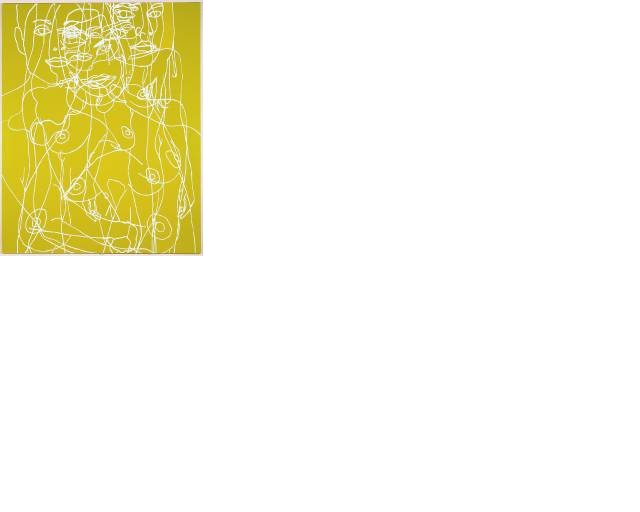
anyway..... the wire project seems to be going well, we were in the media lab for most of today playing about in photoshop and illustrator which was fun. my work this block is based on Gary Hume's work. this piece by Hume is one of my favorites, he does a lot of work in line which is why i chose him.
i have decided to make a brooch using filigree. i have made my own drawings like Gary Hume's in which i have layered my life drawing. i have chosen sections from these which will be soldered together.

Wednesday, 11 November 2009

Assignment 3

During Assignment 2 we, Janna and I, found that we were researching into the same field and therefore decided to investigate bag protection and smart materials together. Over all we found this assessment quite difficult to grasp as the subject we chose is still developing.
KIEKENS, P (2006) Advanced Research Workshop on Intelligent Textiles for Personal Protection and Safety, IOS PRESS 2006
This article gives an insight into the construction of smart textiles. It also looks into the field of intelligent textiles for personal safety and protection which have resulted in building blocks (BB) I think that this is one first steps into acknowledging the improvement in bag security.
DE ROSSI, D (2006) Wearable Mechanizing and Emerging Technologies in Fabric-based Actuations, IOS PRESS 2006
This conference looks into wearable kinesthetic and haptic interfaces between human and machines. It indicates that improvement in the accuracy of human movement tracking systems are being made for tracking fine manipulations. This shows that if such technology was embedded in handbags or suitcases (e.g airport luggage) that can easily be miss-placed or stolen this device would be very significant in order to reclaim any missing objects.
KONCAR, V and BOUSSU, F (2006) Flexible Displays on Textiles for Personal Protection, IOS PRESS 2006
This conference is very relevant into the research in what we are aiming to look into, going into the idea of combining weaving computer and communications technology into uniforms. The aim of this conference was originally to tackle terrorism but through the use of clothing we feel that we could use this technology to fight against handbag theft and muggings. One of our ideas would be to incorporate a small electronic device into the interior of handbags/ luggage bags, this technology break through would be very beneficial in the design of our vision of having safe, affordable bags for all purposes and classes.
Betty and Jordan , http://www.Azuremagazine.com (march/april 2008)
In this artical it discusses reactive textiles which are inspired by superhero costumes, for example batmans bulletproof armor. This explores intelligent clothing, from light up snow suits to bluetooth shirts. These materials can react to heat by colour change. A three-quarter length jacket with photovoltaic solar panels and a removable collar. After four or five hours of exposure to the sun the panels recharge a breast pocket battery creating virtually unlimited juice for the wearers ipod and phone. If this kind of technology is available for everyday use then surely it can be incorporated into our everyday lives as-well.
Joanne Hodge, http://www.joprints.co.uk (2009)
Jo Hodge, a Dundee graduate, produces textiles that are heat reactive and light reactive. These playful garments could create a visual awareness of stolen items, i.e a handbag could be registered to its owner and then if it has been stolen it would change into a well known pattern that could warn other members of public that the bag doesn't rightfully own to them. Therefore giving a visual indication that a robbery or theft has taken place!
CHALAYAN, H (2007) http://www.husseinchalayan.com
In this website Chalayan shows off his inventive skills by producing many garments transform into more needed items, such as a table taking the shape of a dress and vis versa. Although at first this does not seem relevant to the idea of handbag/bag safety, the initial idea of transforming materials and technology would perhaps help even households robberies. For example if instead of the table transforming into a dress it contained a secret compartment in which prize possessions could be easily stored and only located by its owner. Our idea is to incorporate a secret panel into a handbag that could be accessed by a finger print device. This technology seems quite futuristic at the present date but in these crime stricken times we will need to be developing further for later years.
TAO, X (2000) Wearable Electronics and Photonics, Cambridge, England; Woodhead Publishing LTD
This book looks into wearable electronics and photonics covering many areas of cutting-edge research and development into this field providing us with an in-sight into this technology. This book involves a panel of international experts. A summary of recent developments are included which allow us to look into this field of expertise. Topics related to wearable photonics such as fibre-optic sensors and integrated smart textiles structures are the main focus of this book. We feel that this new look into technology will help us to be able to develop our idea further as it contains the information that we will be requiring to know.

Tuesday, 10 November 2009

my top 5

here are my top 5 jewellery websites, i dont really have them in order because there all great site.

1. sdc gallery
2. whynot? comtempary jewellery
3. devientart
4. goldsmiths hall
5. dazzle exhibitions

and here are my other top 5 websites iv chosen a Scottish history site because i am very passionate about my heritage and inspired by the designs that were used in the past. i have also chosen 2 nature websites because i love animals and these sites offers the chance to see more unusual species.

1. BBC news
2. history of Scotland
3. last chance to see
4. lost land of the volcano
5. azure magazine


i also found joprint.co.uk which is good but is not related to jewellery and new designers .com

Tuesday, 3 November 2009

random stuff i found


just thought id stick these images up cos there really interesting. iv never seen any jewellery like this before and i love it (i want one now!!) there by a jeweller called moon young shin check her out she's really cool.